Dawlish Warren
- Melhor paraFreeride, Shortboard
- Nível de habilidadeIniciante até Intermediário
- Tipo de spotOceano
- Nível de movimentoModerado
Estas informações do spot são com apoio de IA e não foram verificadas por humanos. Elas podem estar incompletas, desatualizadas ou incorretas. Verifique a segurança, o acesso, as regras locais e as condições atuais com fontes oficiais ou locais antes de entrar na água.
Sobre
Dawlish Warren is a long, sandy spit with a sheltered beach-break character, but surfing there is explicitly described as unreliable—most of the time waves are too small or blown out, and rideable conditions tend to depend on the right south/southwest swell and offshore north-northwest wind. For surfing, conditions are most often “soft” and low-quality when they do show up. Clean, surfable conditions are rare (about 2% in January), and blown-out periods are much more common (about 17% in January). The break is generally best when north-northwest winds are offshore relative to the beach, and a larger southern swell is typically needed to wrap into the bay. The area is also shaped by strong tidal dynamics at the Exe Estuary mouth. Multiple safety notes emphasize that tide rips through the bight/estuary mouth very fast, so careful tide planning is essential. Hazards reported for the beach include wooden groynes (that can be hard to see at high tide) and submerged sandbars, alongside estuary boat traffic. Beyond surfing, the beach supports wind and traction sports: there is a designated kitesurfing zone and it’s feasible for wingfoiling on the ocean side with caution around groynes and currents. For surfing and other water sports, you’re expected to stay within designated zones—launching inside the nature reserve at the end of the spit is prohibited for kitesurfing/windsurfing, and seasonal wildlife/dog restrictions may apply.
- Designated kitesurfing area on the beach
- Offshore north-northwest wind helps clean conditions
- Winter is the favoured season for surfing
- Strong tidal currents near the estuary mouth are a key safety concern
- Spacious sandy launch area (especially at low to mid tide) and a designated kitesurfing zone.
- Offshore north-northwest winds can clean things up for surf and wind-driven sports.
- Seasonal lifeguard coverage is available, and emergency lifeboat coverage exists for the coast.
- Waves for surfing are often unreliable and frequently too small or blown out.
- Strong tidal currents near the mouth of the Exe Estuary make timing and water control critical.
- Wooden groynes and submerged sandbars pose hazards (especially around higher tides).
- Nature reserve restrictions limit where some wind/kite launches can occur.
Vento, água e temporadas
Vento
- Direção
- N, WNW, SSW, SW
- Direções offshore
- N, NNW, NW
- Faixa de vento
- 12–25 kts
- Tipo de vento
- Frontal — Prevailing winds are described as frontal; north-northwest offshore flow is most useful for cleaner surf/water sports.
- Confiabilidade
- Moderate; depends on Atlantic depressions
- Melhores meses
- janeiro, fevereiro, dezembro
- Tamanhos de kite recomendados
- 9–12 m²
- Zonas de sombra
- Some shelter near the dunes or sea wall depending on wind angle
Água & praia
- Tipo de água
- Oceano
- Praia
- Areia — Praia extensa de areia e restinga.
- Tamanho da praia
- Grande
- Ondas
- Pequeno — As condições de surfe costumam ter ondas pequenas; é preciso uma ondulação maior para que as ondas sejam surfáveis.
- Lançamento
- Grande — Praia extensa de areia, com bastante espaço na maré baixa a média; mais estreita na maré alta.
- Dificuldade de decolagem
- Fácil — Acesso e lançamento fáceis pela praia de areia (com menos espaço na maré alta).
Ao longo do ano
Sometimes crowded; extremely busy with tourists in July and August; quieter in winter
Winter months see the most frequent storms and rainfall
Por esporte
O que esperar de cada um.
There is a designated kitesurfing area on the beach with ample space on the ocean side; best performance is helped by staying aware of estuary currents near the mouth.
- Tamanhos de kite
- 9–12 m²
Suitable for freeriding with south-west or south-east winds; timing around mid-tide is suggested to reduce issues around groynes and strong currents.
- Tamanhos de vela
- 5.5–7.5 m²
Feasible on the ocean side, but caution is advised due to wooden groynes, sandbars, and strong currents; foil friendly is indicated.
- Bom para foil
- Sim — Foil friendly is stated.
- Profundidade mínima
- 1.5m
- Tamanhos de wing
- 4–6 m²
A sheltered beach break with unreliable waves; it most often needs a significant south/southwest swell to produce rideable surf.
- Direção da onda
- Ambos
- Ondulação ideal
- SSW, SW, S
- Altura da ondulação
- 1–2 m
- Maré ideal
- Meio — Best noted at mid-tide to help avoid the groynes/heavier estuary effects for water movement.
- Abrigo
- Protegido — Described as sheltered; still affected by estuary dynamics and the need for the right swell wrapping into the bay.
- Efeito do vento
- Offshore north-northwest winds provide the cleanest conditions.
- Ondulação maior
- Needs significant swell to wrap into the bay; even with swell, it can still be too small/unreliable.
- Qualidade da onda
- Ruim — Wave quality is commonly poor due to unreliability.
- Força da onda
- Suave — Waves are generally described as soft.
- Formato da onda
- Misto — Often mushy/soft when it does work; otherwise unreliable.
- Velocidade de quebra
- Médio — Surf sources describe medium peel speed; other details note slow peel on mushier conditions.
- Duração da sessão
- Curta — Rides are typically short; one source gives 30–50 m.
- Duração típica da sessão
- 30–50 m
- Detalhes da duração da sessão
- Typically soft/mushy with short rides; one source quantifies typical ride length as about 30–50 m.
Confira a previsão antes de ir
Veja vento, ondas, clima e janelas de sessão para Dawlish Warren na visão completa da previsão.
Outros spots na região
Shazz
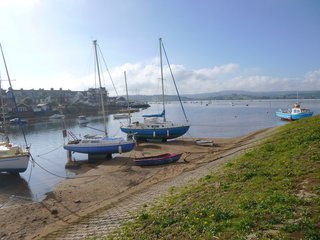
Boats on shore at The Point by ShazzCC BY-SA 2.0FonteRedimensionadaO que saber antes de entrar na água
Segurança, acesso, restrições, resgate e regras locais podem mudar. Trate estes detalhes como informativos e confirme tudo localmente antes de lançar.
Perigos
- Strong tidal currents near the mouth of the Exe Estuary
- Wooden groynes (can be hidden at high tide)
- Submerged sandbars
- Estuary boat traffic
- Nature reserve restricted areas
- Moderate shore break (for surfing)
Resgate & apoio
- Salva-vidas
- Sazonal — RNLI lifeguards are stationed seasonally (typically May–September).
- Resgate e autorresgate
- Limitado — Rescue availability is described as limited; estuary conditions can make self-rescue difficult.
- Informações de emergência
- In an emergency dial 999 and ask for the Coastguard. Nearest major hospital is in Exeter; RNLI lifeguards are seasonal and the local lifeboat service provides wider coastal emergency coverage.
- Localismo / clima
- Nenhum — No localism issues indicated.
Regras do spot
Stay within the designated water sports zone. Do not launch within the National Nature Reserve at the end of the spit.
- No launch within the Nature Reserve
- Seasonal dog restrictions
- Wildlife protection zones
- Check tide times carefully—currents can be very difficult to paddle against.
- Watch out for groynes which can be hidden at high tide.
- Kitesurfing/windsurfing are prohibited in the National Nature Reserve at the end of the spit.
Como chegar & acesso
- Cidade mais próxima
- Exeter
- Vila mais próxima
- Dawlish
- Aeroporto mais próximo
- Exeter Airport (EXT)
- Estacionamento
- Large pay and display car park located at the entrance to the beach
- Transporte público
- Excellent rail access via Dawlish Warren railway station (short walk to the beach area).
- Nível de custo
- Moderado
- Idioma local
- English
O que tem na praia
- Hospedagem
- Cidade próxima — Multiple holiday parks, campsites, and hotels are located within the immediate vicinity of the beach.
- Comida e bebida
- Various cafes, pubs, and ice cream stalls located at the beach front.
- Aluguel de equipamentos:
- Limited availability locally; bringing gear from nearby areas is referenced.
- Armazenamento de equipamento
- Not available on-site.
- Reparo de equipamento
- Basic repair services available via local shops in the Exmouth and Teignmouth area (not on-site at the beach).
Ainda não há escolas ou serviços listados para este spot.
De riders que já estiveram aqui
Últimas condições reportadas
Perguntas sobre o spot
Perguntas frequentes
Quando é a melhor temporada em Dawlish Warren?
Os melhores meses no geral em Dawlish Warren são janeiro, fevereiro, dezembro.
Quais direções de vento funcionam em Dawlish Warren?
Dawlish Warren funciona com ventos de N, WNW, SSW, SW. As direções offshore são N, NNW, NW.
Quais tamanhos de equipamento são recomendados em Dawlish Warren?
Tamanhos de equipamento recomendados em Dawlish Warren: Kitesurf: 9–12 m² · Windsurf: 5.5–7.5 m² · Wing foil: 4–6 m². A faixa típica de vento é 12–25 kts.
Para qual nível de habilidade Dawlish Warren é indicado?
Dawlish Warren é indicado para estes níveis de rider: Kitesurf: Intermediário · Windsurf: Intermediário · Wing foil: Intermediário · Surfe: Iniciante.